
Digital dentistry uses advanced digital technologies and computer-based tools to improve the diagnosis, planning, and treatment of dental conditions. Dentists now use digital X-rays, intraoral scanners, and 3D imaging with traditional methods to assess a patient’s oral health more accurately. These technologies capture detailed images of teeth, gums, and jaw structures, allowing for early problem detection and the creation of more precise treatment plans.
Digital dentistry offers significant advantages, including increased speed, comfort, and efficiency in dental treatments for patients. For example, digital impressions can replace traditional molds, which some patients find uncomfortable. Digital scans are fast and accurate, helping dentists design restorations such as crowns, bridges, or aligners with greater precision. Additionally, digital records make it easier to track a patient’s dental history and monitor their progress throughout treatment.
Digital dentistry improves diagnostic accuracy and reduces the risk of errors during treatment. High-resolution digital images allow dentists to detect cavities, gum disease, and other oral health issues earlier. Computer-guided planning increases the precision and predictability of procedures such as dental implants and orthodontic treatments. Overall, digital dentistry enhances the quality of dental care and the patient experience by making treatments safer, faster, and more reliable.
How Is Digital Dentistry Changing Dental Treatments
Digital dentistry is changing the approach to dental treatment planning and execution through the use of advanced technology and computer-based tools. Contemporary dental clinics utilize digital X-rays, intraoral scanners, and 3D imaging to obtain detailed images of a patient’s teeth and gums. These technologies assist dentists in identifying dental issues at an earlier stage and in planning treatments with greater accuracy. Consequently, this leads to quicker diagnoses, more precise treatment planning, and more reliable outcomes for patients.
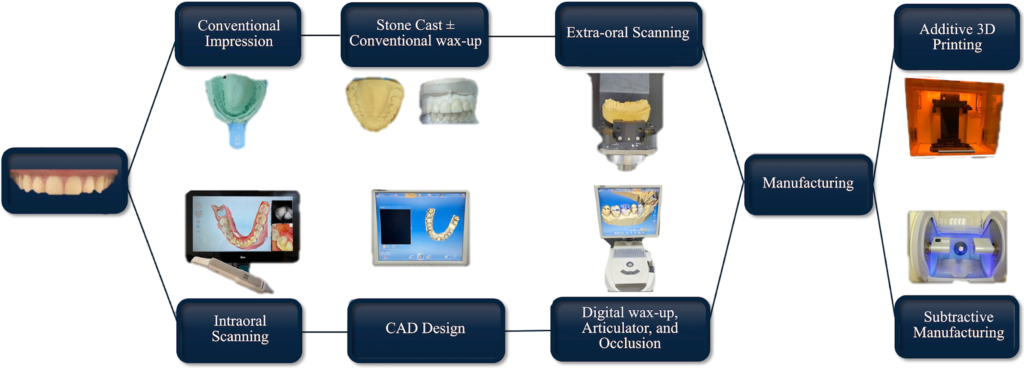
Digital dentistry is transforming treatments by improving comfort and efficiency. Messy traditional dental impressions are increasingly being replaced by digital scans that are faster and more precise. These digital impressions allow for the design of crowns, bridges, veneers, and clear aligners with greater accuracy. Additionally, digital technology often reduces the number of dental visits needed, as restorations can be planned and manufactured more quickly.
Digital dentistry increases the precision and safety of complex procedures, such as dental implants, orthodontic treatments, and full-mouth restorations. With computer-guided treatment planning, dentists achieve more accurate implant placement and develop personalized treatment plans for each patient. This technology improves treatment outcomes and enhances the overall patient experience by reducing discomfort, saving time, and providing more reliable dental care.
The Role of Digital Dentistry in Reducing Treatment Errors
1. Accurate Diagnosis with Digital Imaging: Digital dentistry uses advanced tools, including digital X-rays and 3D imaging, to provide precise, detailed visualizations of teeth, gums, and jaw structures. These high-resolution images help detect dental issues such as cavities, infections, or bone loss early. This improved visibility enables dentists to make more accurate diagnoses and reduces the likelihood of misinterpretation or treatment errors.
2. Precise Digital Impressions: Traditional dental impressions can sometimes result in minor inaccuracies due to material distortion or patient movement. In contrast, digital dentistry uses intraoral scanners to obtain precise digital impressions of the teeth. These accurate scans enable the production of well-fitting crowns, bridges, veneers, and aligners, reducing errors during treatment.
3. Computer-Guided Treatment Planning: Digital dentistry enables dentists to utilize specialized software for pre-planning treatments. For instance, procedures like dental implant placement can be digitally planned to establish the precise position and angle of the implant. This computer-guided approach minimizes the potential for errors and promotes more predictable treatment results.
4. Improved Communication and Treatment Monitoring: Digital records and images facilitate dentists’ review of patient data and treatment progress. These tools allow dentists to compare current images with previous ones to monitor improvements and detect potential issues early. Improved communication and documentation help minimize treatment errors and ensure better patient care.
5. Faster and More Reliable Dental Procedures: Digital technology increases the efficiency and precision of dental procedures. Automated systems and digital tools reduce the likelihood of human error, allowing dentists to deliver consistent results. As a result, treatments are safer, outcomes improve, and patient confidence in dental care increases.
Myths and Facts About Digital Dentistry
Myth: Digital Dentistry Is Only for Cosmetic Treatments
Fact: Digital dentistry is used in a wide range of dental procedures beyond cosmetic treatments. It facilitates cavity diagnosis, aids in dental implant planning, supports orthodontic treatments, and improves the accuracy of creating crowns and bridges.
Myth: Digital Dental Technology Is Not Safe
Fact: Digital dental technologies are commonly used in contemporary dental clinics and are generally considered safe. For instance, digital X-rays typically expose patients to lower levels of radiation than traditional X-rays, offering a safer option for diagnostic purposes.
Myth: Digital Dentistry Is Only Available in Big Cities
Fact: Currently, dental clinics in smaller cities and towns are increasingly adopting digital dental technologies. The availability of modern equipment, such as digital scanners and imaging systems, is becoming more widespread, enhancing dental care in various areas.
Myth: Digital Dentistry Is Very Complicated for Patients
Fact: Digital dentistry enhances the ease and comfort of dental visits for patients. Procedures such as digital impressions offer an alternative to traditional molds, which can often be uncomfortable. Additionally, digital scans provide a quicker and more convenient experience.
Myth: Digital Dental Treatments Take Longer
Fact: One of the main benefits of digital dentistry is its potential to reduce treatment time. Digital tools allow dentists to quickly diagnose issues and design restorations more efficiently, which can decrease the number of required dental visits.
Myth: Digital Dentistry Replaces the Dentist’s Skills
Fact: Digital technology enhances dentists’ expertise by providing more precise information and tools to improve treatment outcomes. Dentists integrate their skills with technology to deliver optimal care.
