
Dental Implants vs Dentures. Tooth loss is a common dental condition affecting millions worldwide, caused by factors such as gum disease, tooth decay, injury, or aging. Missing teeth can impact physical functions like eating and speaking, and affect overall appearance. However, advances in dentistry offer effective solutions for restoring missing teeth, with dental implants and dentures among the most commonly recommended treatments.
Which is better—dental implants or dentures? The answer varies because each treatment option has distinct advantages, limitations, and suitability, depending on factors such as the patient’s oral health, lifestyle, and budget. Some people choose dentures because they are affordable and non-surgical, while others prefer implants for their permanence and natural appearance.
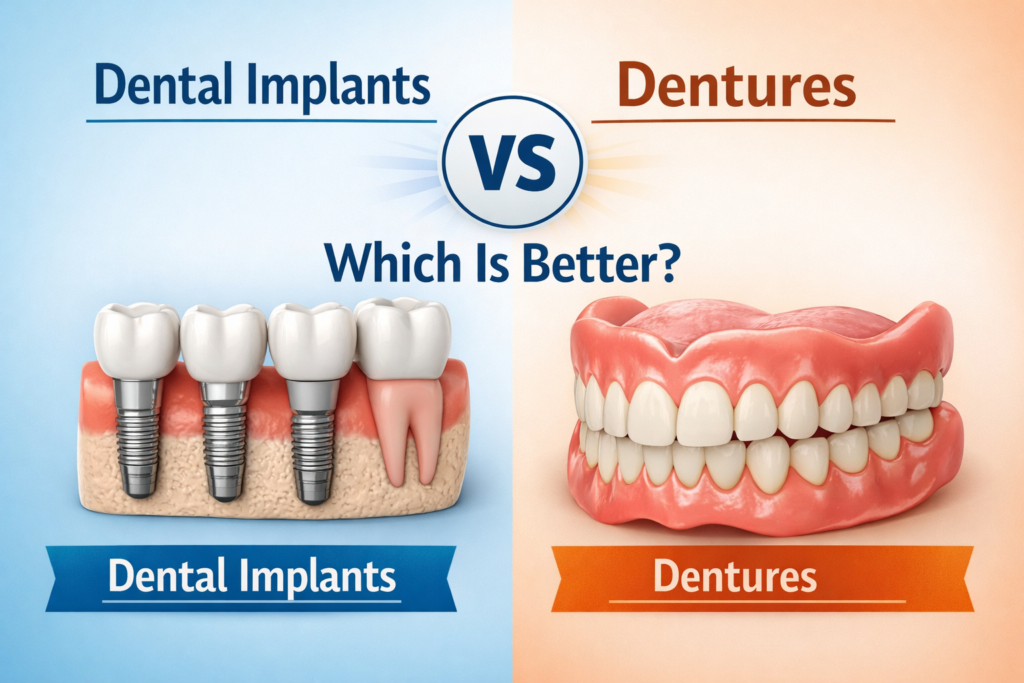
Modern dental technology has significantly improved treatment options, with dental implants now designed to replicate the form and function of natural teeth and potentially last for several decades. Similarly, dentures have evolved to offer greater comfort and a more natural appearance than earlier models. However, there are still important differences in long-term benefits, durability, and comfort between these two solutions.
Understanding Tooth Loss and Replacement Options
The loss of one or more teeth may initially seem like a cosmetic issue, but it can have broader effects. Missing teeth can cause difficulty chewing, speech problems, shifting of adjacent teeth, and changes in facial structure. Additionally, the jawbone in areas with missing teeth may gradually shrink over time due to the lack of stimulation from tooth roots.
When teeth are lost and not replaced, adjacent teeth may shift into the space, potentially causing bite problems and increasing the risk of cavities and gum disease. Additionally, missing teeth can affect self-esteem, sometimes leading individuals to avoid smiling or social interactions.
Dental professionals stress the importance of addressing missing teeth promptly. Restorative options like dental implants and dentures restore oral function, improve appearance, and help preserve jawbone structure. Although both solutions mimic natural teeth, they do so through different methods.
What are dental implants vs. dentures?
Dental Implants: Dental implants are considered a modern and effective method for replacing missing teeth. They involve surgically placing a small titanium post into the jawbone, which serves as an artificial tooth root. After the implant integrates with the surrounding bone through a process called osseointegration, a crown, bridge, or denture can be securely attached to complete the restoration.
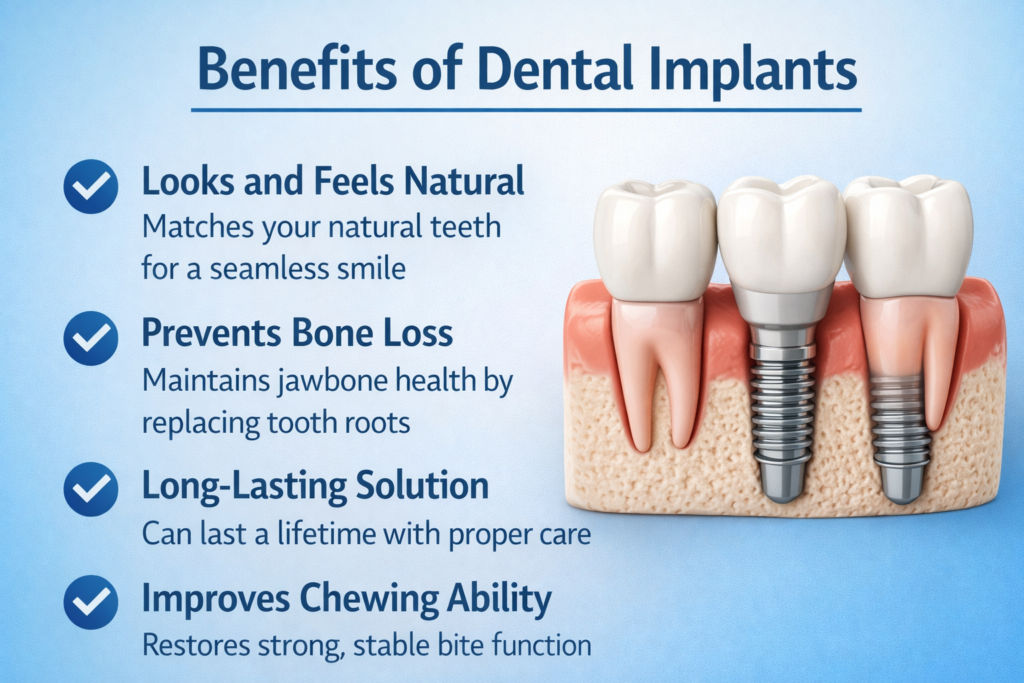
Dental implants are known for their durability, with research showing success rates of 95% to 98% over ten years when placed by qualified professionals. This reliability has made implants a widely used option for tooth replacement. The process is usually completed in stages, starting with the surgical placement of the implant into the jawbone. After a healing period of several months, during which the implant integrates with the bone, a custom crown is attached to complete the restoration, resulting in an outcome that closely matches the appearance, feel, and function of a natural tooth.
Implants, when properly cared for, can last for decades. Research shows that with consistent oral hygiene and regular dental checkups, implants may remain functional for 20 years or even a lifetime.
Dentures: Dentures are removable prosthetic appliances designed to restore missing teeth and adjacent tissues. Used for centuries, they remain a common option for treating tooth loss, especially for individuals who have lost multiple teeth or an entire arch.
Contemporary dentures are designed to be more comfortable and lifelike than earlier models. Commonly made from acrylic resin and sometimes reinforced with metal frameworks for durability, they are tailored to fit the individual’s mouth, effectively restoring both function and appearance. Dentures are classified into two types: complete dentures, which replace all teeth in the upper or lower jaw, and partial dentures, which replace several missing teeth and are supported by the remaining natural teeth.
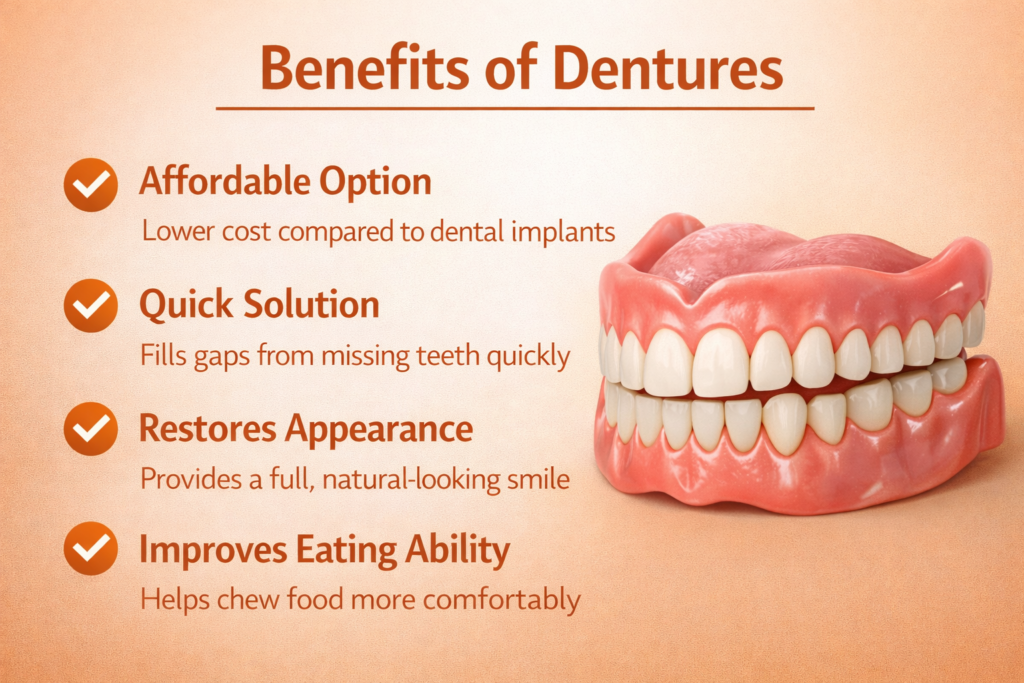
Dentures are typically more cost-effective and faster to obtain than implants; however, they have certain drawbacks. Unlike implants, which are securely anchored in the bone, dentures rest on the gums and may sometimes slip or cause discomfort. An important consideration is the lifespan of traditional dentures, which typically ranges from 5 to 8 years. Over time, changes in the jawbone can affect its fit and require replacement.
Dental Implants vs Dentures: Key Differences
The key difference between dental implants vs dentures is:
Durability and Longevity: The main difference between dental implants and dentures is their durability. Dental implants are designed to be a long-term solution and can last for decades with proper care. Studies indicate that implant survival rates exceed 90–95% over a 10-year period, demonstrating their reliability.
Dentures typically need replacement every 5 to 10 years as a result of wear and changes in the jawbone. Bone resorption over time may lead to loosening of the dentures, necessitating adjustments or relining.
Comfort and Stability: Dental implants are securely anchored in the jawbone, ensuring stability during activities such as eating and speaking. This secure placement provides a natural sensation and eliminates the need for adhesives.
Dentures rest directly on the gums and can sometimes shift or slip, especially when eating certain foods. In some cases, adhesives are needed to help keep them in place.
Appearance and Natural Feel: Dental implants are designed to closely mimic natural teeth, emerging directly from the gum line like real teeth. While dentures can also look natural, their removable structure may sometimes feel less realistic.
Cost Comparison: Dental Implants vs Dentures
Cost often plays a significant role in choosing between implants vs dentures. Dentures are usually more economical upfront because they do not require surgical procedures or specialized materials.
Dental implants are surgically placed using specialized materials and typically require multiple appointments, leading to higher upfront costs. However, they may offer greater long-term value because of their durability and reduced need for replacements over time.
Maintenance and Oral Hygiene
Proper oral hygiene is important regardless of the chosen method. Dental implants require care similar to that of natural teeth, including brushing, flossing, and routine dental check-ups to support the health of the surrounding gums.
Dentures necessitate a distinct care routine, involving daily removal for cleaning and overnight soaking to preserve their shape and ensure proper hygiene.
Dentures typically necessitate the use of specialized cleaning products, whereas dental implants integrate seamlessly with the mouth, making routine oral hygiene more straightforward.
Eating and Speaking Ability
Dental implants provide the significant benefit of improved chewing ability. Securely anchored in the jawbone, they allow individuals to eat a wide variety of foods, including crisp fruits and vegetables.
Dentures can impact the ability to consume certain foods, as they may shift when subjected to pressure. Foods that are sticky or hard have the potential to cause dentures to become loose or move.
Speech may be affected by dentures, especially during the initial adjustment period, while implants typically support more natural speech because they function more like natural teeth.
Bone Health and Facial Structure
Dental implants are essential for maintaining jawbone health because they replace missing tooth roots and provide the stimulation needed to prevent bone shrinkage.
Dentures do not provide the same level of stimulation as natural teeth, which may lead to ongoing bone resorption over time. This gradual process can change the shape of the face, potentially causing a sunken appearance around the mouth.
Dental implants and dentures are both viable options for replacing missing teeth, each meeting different needs. Dental implants provide a long-lasting solution that closely mimics natural teeth, helps preserve bone structure, and offers durability. In contrast, dentures are a cost-effective, non-surgical alternative, making them a practical choice for many people.
