
Gum disease can have a substantial impact on overall health, as it extends beyond being merely a dental issue. Because the mouth is connected to the body through the bloodstream, infections in the gums can affect other organs and systems.
What Is Gum Disease?
Periodontal disease, commonly referred to as gum disease, is an infection affecting the tissues that support the teeth. It initiates with the accumulation of plaque, which is a sticky bacterial layer that develops on the teeth as a result of inadequate oral hygiene.
There are two main stages:
1. Gingivitis: In the initial stage, gums exhibit redness and swelling and may bleed during brushing. This condition is reversible.
2. Periodontitis: In the advanced stage, the infection penetrates more deeply, causing damage to bone and tissue, which can result in the loss of teeth.
How Gum Disease Spreads in the Body
When gums become inflamed, small gaps develop between the teeth and gums, allowing bacteria to enter the bloodstream. As these bacteria circulate throughout the body, they may cause inflammation in various organs.
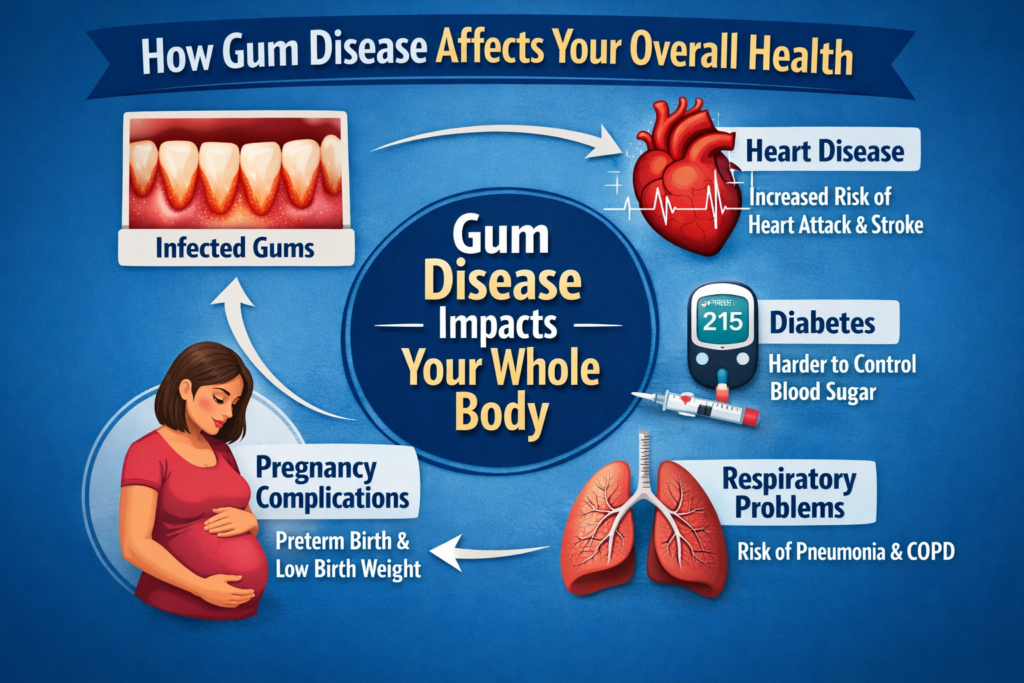
Chronic inflammation is a significant concern, functioning like a persistent, low-level inflammation within the body, which, over time, can lead to serious health issues.
Connection Between Gum Disease and Heart Disease
Studies indicate a significant connection between gum disease and heart issues. Bacteria originating from infected gums can reach the arteries, potentially leading to inflammation in blood vessels.
Inflammation can lead to:
- Narrowed arteries
- Increased risk of heart attack
- Higher chance of stroke
Individuals with advanced gum disease typically face an increased likelihood of developing cardiovascular disease.
Impact on Diabetes
The relationship between gum disease and diabetes works both ways.
Gum infections can lead to increased blood sugar levels, which in turn can create conditions more conducive to the growth of infections.
This establishes a detrimental cycle where poor gum health complicates diabetes management, while uncontrolled diabetes simultaneously elevates the likelihood of developing gum disease.
Effect on Respiratory Health
Bacteria originating from the mouth have the potential to be inhaled into the lungs, which can lead to respiratory infections like pneumonia.
Individuals who are older or have compromised immune systems are particularly vulnerable. Keeping gums healthy can lower the risk of lung complications.
Pregnancy and Gum Disease
Hormonal changes occurring during pregnancy can lead to increased sensitivity in the gums. If gum disease arises, it may elevate the risk of:
- Premature birth
- Low birth weight
- Pregnancy complications
Link to Other Health Conditions
Emerging research suggests connections between gum disease and:
- Rheumatoid arthritis
- Alzheimer’s disease
- Kidney disease
Ongoing studies suggest that chronic inflammation is the common factor connecting these conditions.
Prevention of gum disease
1. Brush Your Teeth Twice Daily
Brushing your teeth twice daily assists in removing plaque and bacteria that build up on the tooth surface and along the gum line. A soft-bristled toothbrush and fluoride toothpaste should be used, and brushing should be done gently for a minimum of two minutes to safeguard the gums from irritation.
2. Floss Every Day
Daily flossing helps remove food particles and plaque from areas between teeth that a toothbrush cannot reach. This practice can prevent tartar buildup and lower the risk of gum inflammation and infection.
3. Use an Antibacterial Mouthwash
An antibacterial mouthwash assists in diminishing harmful bacteria in the mouth and aids in controlling plaque accumulation. Additionally, it contributes to maintaining fresh breath and offers added protection against gum disease.
4. Visit Your Dentist Regularly
Undergoing professional dental checkups every six months allows for the early detection of gum issues. During these visits, dentists remove hardened tartar that cannot be removed with at-home care, thereby preventing the advancement of gum disease.
5. Quit Smoking and Tobacco
Smoking impairs the immune system and decreases blood circulation to the gums, making it more difficult for infections to heal. Ceasing tobacco use greatly reduces the likelihood of developing severe gum disease.
6. Maintain a Healthy Diet
A diet that includes a variety of nutrients, particularly vitamins such as vitamin C and calcium, contributes to the health of gums and teeth. Limiting the intake of sugary foods can help reduce bacterial growth, thereby decreasing the risk of gum infections.
7. Replace Your Toothbrush Regularly
Replacing your toothbrush every three to four months is recommended for maintaining effective cleaning, as worn-out bristles may not adequately remove plaque and can potentially damage your gums.
8. Avoid Aggressive Brushing
Applying excessive pressure when brushing can harm gum tissue and lead to recession. Utilizing gentle, circular motions is more effective and safer for maintaining healthy gums.
9. Stay Hydrated
Consuming adequate amounts of water assists in removing food particles and bacteria. Additionally, maintaining proper hydration prevents dry mouth, thereby reducing the risk of gum disease.
