
People’s Dental Care is one of the best dental clinics. Let’s face it—going to the dentist is rarely at the top of anyone’s list of favorite activities. Many people delay appointments until they feel discomfort. However, regular dental checkups are not just for fixing problems; they help prevent issues before they start. Think of your dentist as your mouth’s mechanic. Just as you would not wait for your car to run out of oil before taking it to the shop, you should not wait for a toothache before having your teeth examined.
Regular dental checkups are essential for maintaining both your oral health and overall well-being. Think of your mouth as the front door to your health. When something is wrong there, it can have a domino effect on your heart, immune system, and mental well-being. That is why routine dental check-ups are so important; they catch early signs of decay, gum disease, infections, and even oral cancer—issues that might develop without obvious symptoms.
Prevention is often simpler and more cost-effective than treatment. A cavity detected early can be treated quickly and inexpensively, while neglecting it may require more invasive and expensive procedures such as a root canal or extraction. Regular dental checkups can help prevent pain, stress, and long-term costs. In addition to health benefits, maintaining a healthy smile also boosts confidence.
What Happens During a Dental Checkup
Many people avoid dental appointments because they are unsure what to expect. However, understanding what happens during a checkup can make the experience feel less intimidating. The process is simple and organized to protect oral health.
A standard dental appointment begins with a thorough oral evaluation. The dentist examines the teeth, gums, tongue, and inner cheeks to identify any signs of cavities, plaque buildup, gum inflammation, or unusual lesions. Although teeth may appear healthy on the surface, problems can exist beneath, highlighting the importance of professional assessments.
The next step is professional cleaning, typically performed by a dental hygienist. No matter how diligently one brushes and flosses at home, plaque can eventually harden into tartar. Tartar cannot be removed with a toothbrush, so specialized dental instruments are used to gently eliminate this buildup, especially around the gum line. After scaling, the teeth are polished to remove surface stains and smooth the enamel.
A dentist might review your oral hygiene practices and offer suggestions for improvement. This could include adjusting your brushing technique or recommending specific products to help you achieve better.
Benefits of Regular Dental Checkups
A dental checkup isn’t something to fear—it’s a proactive step toward maintaining a healthy, pain-free smile.
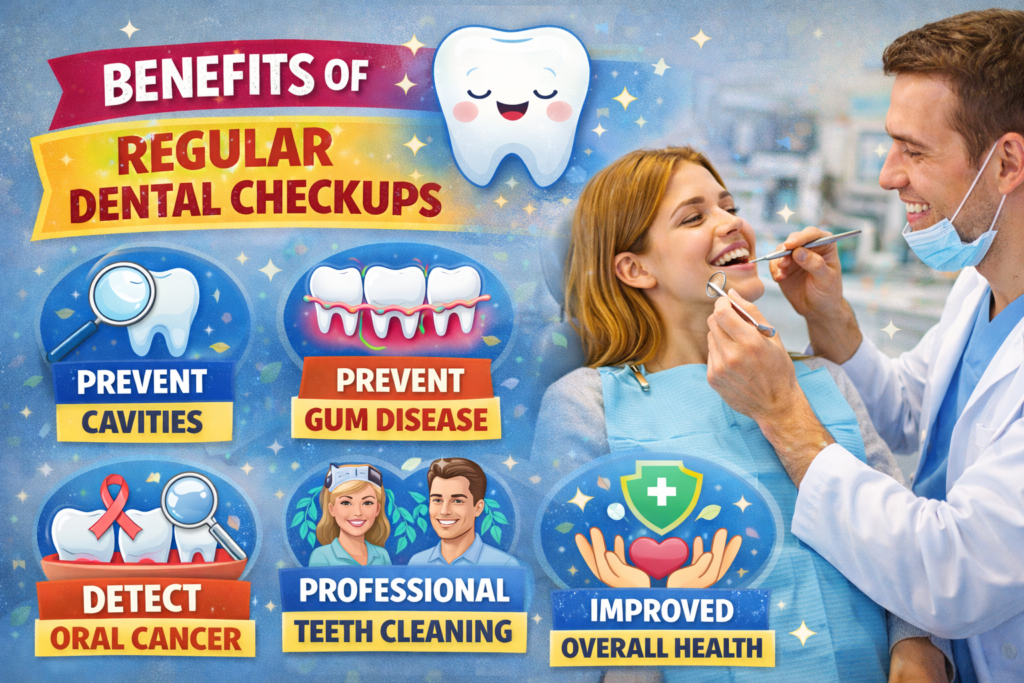
1. Early Detection of Dental Problems
One of the main advantages of regular dental checkups is early detection of issues. Dental problems often develop gradually and without obvious symptoms, which can allow them to become more serious over time. By the time pain occurs, the condition may have already progressed significantly.
Cavities in their early stages are painless and often go unnoticed. However, bacteria may gradually damage the tooth beneath the enamel. A dentist can detect these early signs during a routine examination and treat them promptly with a simple filling. If left untreated, a minor cavity can progress, affect the pulp, and potentially require a root canal or even lead to tooth loss.
Gum disease presents a subtle risk, often starting with gingivitis, which is marked by mild redness and bleeding. These early signs are frequently dismissed as unimportant. If untreated, gingivitis can progress to periodontitis, a serious infection that damages the bone supporting the teeth. Early detection allows for complete reversal of gingivitis, but advanced stages of gum disease are much more difficult to treat.
Regular dental visits serve as a preventive measure for oral health, identifying minor issues before they develop into significant problems. This is like detecting a small crack in a wall before it leads to structural damage. Early intervention ensures that treatments remain straightforward, cost-effective, and minimally invasive.
2. Prevention of Gum Disease
Gum disease is a major cause of tooth loss worldwide and is especially concerning because it often progresses quietly. In the early stages, individuals may notice slight bleeding while brushing or mild gum sensitivity, which may not seem urgent. However, beneath the surface, bacteria may be damaging the tissues and bone that support the teeth.
Routine dental examinations help prevent gum disease. During these visits, dentists and hygienists assess gum pocket depth, detect signs of inflammation, and remove plaque and tartar that regular brushing cannot eliminate. Professional cleanings reduce bacteria associated with gum infections.
- Eliminates plaque and tartar that regular brushing cannot reach.
- Reduces gum inflammation and bleeding.
- Prevents the advancement to severe gum disease.
- Supports the bone structure around the teeth.
3. Oral Cancer Screening
Oral cancer is a serious medical condition that often goes undetected in its early stages. Unlike cavities or gum disease, it may not cause pain right away. Small sores, lumps, or unusual patches in the mouth are often dismissed as minor irritations. However, early detection greatly improves survival rates, emphasizing the importance of regular dental checkups for prompt identification of the disease.
- Detects early signs of abnormal sores, lumps, or tissue changes.
- which can enhance the chances of successful treatment.
- Offers a professional evaluation of suspicious symptoms.
- preventive safety measures for maintaining overall health.
4. Professional Teeth Cleaning
- Removes hardened tartar that is not possible to eliminate at home.
- Eliminates surface stains for a brighter appearance.
- Reduces bad breath caused by bacterial buildup.
- Improves overall oral hygiene.
5. Cost Savings in the Long Run
- Helps avoid costly procedures through early problem intervention.
- Reduces the need for emergency dental visits.
- prevents the necessity for complex surgeries or restorative treatments.
- saves money by focusing on preventive care maintenance.
6. Improved Overall Health
- It reduces bacteria that could impact the heart and other organs.
- Assists in managing conditions such as diabetes.
- Lowers the risk of systemic infections.
- Supports a stronger immune system.
7. Boosts Confidence and Self-Esteem
- Maintains oral hygiene and health
- helps prevent stains and bad breath
- supports more confident communication
- improves personal and professional interactions.
8. Personalized Oral Care Advice
- Offers guidance on effective brushing and flossing methods.
- recommends appropriate dental products.
- provides dietary advice for improved oral health.
- customizes guidance according to your particular dental needs.
9. Establishes Healthy Habits for Children
- Promotes ongoing oral hygiene habits.
- oversees appropriate tooth development.
- prevents cavities in early childhood.
- fosters comfort and familiarity with dental visits.
Regular dental checkups serve as a comprehensive preventive health measure, contributing to oral hygiene maintenance, cost savings, and general well-being.
